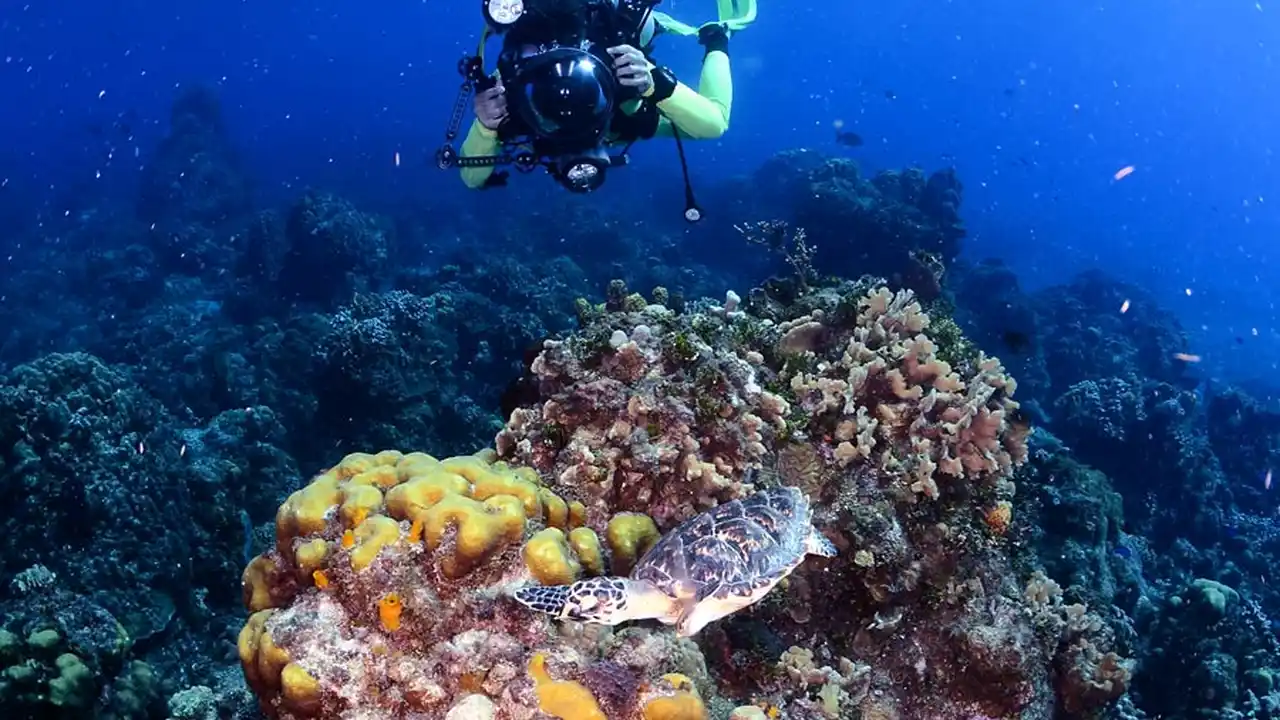
Scuba Diving with a Buddy The Importance of Teamwork
Understand the buddy system's role in enhancing safety and enjoyment during scuba dives.

Understand the buddy system's role in enhancing safety and enjoyment during scuba dives.
Scuba Diving with a Buddy The Importance of Teamwork
Why the Buddy System is Your Underwater Lifeline
Hey divers! Let's talk about something super important in scuba diving: the buddy system. You might hear it mentioned a lot, but do you really get why it's so crucial? It's not just a rule; it's your underwater lifeline. Diving with a buddy isn't just about having someone to share cool sightings with; it's fundamentally about safety, problem-solving, and enhancing your overall dive experience. Think of it this way: you wouldn't go hiking in the wilderness alone, right? The ocean, as beautiful as it is, can be just as unpredictable. Having a trusted partner by your side means you have an extra set of eyes, hands, and brains to help out if things go sideways. From simple gear checks to more serious emergencies, your buddy is there for you, and you for them. It's a partnership built on trust and mutual responsibility, and it makes every dive safer and more enjoyable.
Essential Buddy Checks Before Every Dive
Before you even hit the water, the buddy check is your first line of defense. This isn't just a quick glance; it's a systematic review of each other's gear to ensure everything is set up correctly and functioning. We're talking about the 'BWRAF' acronym that most certification agencies teach: BCD, Weights, Releases, Air, Final check. Let's break it down:
- B for BCD: Check that your buddy's BCD inflates and deflates properly. Make sure all hoses are connected securely and that the oral inflator works.
- W for Weights: Confirm your buddy's weights are correctly positioned and, crucially, that their quick-release mechanism is accessible and functional. You need to know how to ditch their weights in an emergency, and they need to know how to ditch yours.
- R for Releases: This covers all buckles and straps – BCD shoulder straps, waist strap, tank band, and fin straps. Ensure they are all securely fastened but also easily releasable.
- A for Air: This is a big one. Check your buddy's air supply. Turn on their air, check their pressure gauge, and take a few breaths from their primary second stage and their alternate air source (octopus). Make sure the air tastes normal and the gauge reads full.
- F for Final Check: This is a general overview. Are all hoses tucked away? Is the mask clear? Are fins on correctly? Do they have their dive computer and any other essential accessories?
Performing these checks diligently every single time builds good habits and significantly reduces the chance of gear-related issues underwater. It's a team effort that sets the stage for a safe dive.
Communication is Key Underwater Hand Signals and Beyond
Once you're underwater, verbal communication is out, so hand signals become your language. You and your buddy need to be on the same page with these. Standard signals like 'OK,' 'something is wrong,' 'low on air,' 'out of air,' 'go up,' 'go down,' and 'stay together' are universal. But it's also a good idea to discuss any specific signals you might use for marine life sightings or other unique situations before the dive. Beyond hand signals, maintaining eye contact and being aware of your buddy's position and behavior are crucial. Are they looking stressed? Are they struggling with buoyancy? Are they falling behind? These non-verbal cues are just as important as formal signals. Regular check-ins, even just a quick 'OK' signal, ensure you both know the other is doing well. If you're diving in low visibility or at night, consider using dive lights for signaling. Some divers even use slates for more complex messages, which can be super handy for pointing out specific marine life or planning the next part of the dive.
Problem Solving and Emergency Procedures with Your Buddy
This is where the buddy system truly shines. Imagine you have an equipment malfunction, like a free-flowing regulator, or you get a cramp. Your buddy is right there to assist. They can offer their alternate air source, help you with a fin, or even assist with an emergency ascent. In a real emergency, like an out-of-air situation, your buddy is your immediate source of air. This is why practicing alternate air source use is so vital during your training. It needs to be second nature. Beyond equipment issues, your buddy can help if you become disoriented, get caught in a current, or even if you just need a moment to calm down. They are your first responder. Knowing that someone has your back allows you to relax and enjoy the dive more, knowing that if something unexpected happens, you're not alone.
Maintaining Proximity and Staying Together Underwater
The whole point of the buddy system is to be able to help each other, and you can't do that if you're miles apart. Maintaining proximity is non-negotiable. This doesn't mean you have to hold hands the entire dive, but you should always be within arm's reach or at least close enough to respond quickly to a signal or an emergency. Factors like visibility, current, and the dive plan will influence how close you need to be. In low visibility, you might even hold onto each other's BCDs. Before the dive, discuss your plan for staying together. What happens if you get separated? The standard procedure is to search for 60 seconds, then surface. Make sure you both agree on this. It's also a good idea to agree on a maximum depth and bottom time, and to regularly check each other's air gauges. This proactive approach prevents separation and ensures you both stick to the dive plan safely.
Enhancing Enjoyment and Sharing the Experience
Beyond safety, diving with a buddy simply makes the experience better. You have someone to share those incredible moments with – spotting a rare creature, navigating a cool swim-through, or just marveling at the beauty of the reef. You can point things out to each other, take turns being the 'leader,' and debrief after the dive, reliving the highlights. It's a shared adventure that builds camaraderie and creates lasting memories. Plus, having a buddy means you can take turns being the photographer or videographer, capturing those amazing moments for each other. It's a social activity that's made even richer by the presence of a trusted companion.
Choosing the Right Dive Buddy and Building Trust
So, how do you pick a good buddy? Ideally, it's someone with a similar skill level, experience, and dive interests. If one of you is a beginner and the other is an experienced tech diver, it might not be the best match for a recreational dive. Communication before the dive is crucial. Discuss your comfort levels, any concerns, and what you hope to see. If you're diving with someone new, take a few minutes to get to know them and their diving habits. Trust is built over time, but a thorough pre-dive briefing and buddy check can establish a good foundation. If you're on a dive boat and get paired with someone you don't know, don't be shy about asking questions and making sure you're both comfortable with the plan. Remember, your safety is paramount, and a good buddy relationship is built on open communication and mutual respect.
Recommended Products for Enhanced Buddy Diving
While the core of buddy diving is about communication and trust, certain gear can definitely enhance the experience and safety. Here are a few items worth considering:
Dive Computers with Air Integration and Buddy Features
These are game-changers for buddy diving. Instead of constantly asking your buddy for their air pressure, some advanced dive computers can wirelessly monitor your buddy's air supply. This allows for seamless monitoring and better air management for both of you.
- Garmin Descent Mk2i: This is a premium option. It's not just a dive computer; it's a full-fledged smartwatch. Its standout feature for buddy diving is the SubWave sonar technology, which allows you to monitor up to 5 other divers' tank pressures from up to 10 meters away. This is incredibly useful for groups or if you're leading a dive. It also has GPS, multiple dive modes, and a long battery life.
- Shearwater Perdix AI: A favorite among technical and recreational divers for its clear, customizable screen and intuitive interface. While it doesn't directly monitor your buddy's air, it's an excellent air-integrated computer that provides precise data, allowing you to manage your own air efficiently and communicate effectively with your buddy. Its robust build and reliability make it a top choice.
- Mares Smart Air: A more budget-friendly option that still offers air integration. It's compact, easy to read, and provides all the essential dive data, including tank pressure. While it doesn't have the multi-diver monitoring of the Garmin, it's a solid choice for individual air management, which is crucial for effective buddy diving.
Comparison: The Garmin Mk2i is the clear winner for direct buddy air monitoring, but it comes at a premium price (often $1,500+). The Shearwater Perdix AI (around $1,000-$1,200 with transmitter) is a fantastic all-around computer for serious divers, known for its reliability. The Mares Smart Air (around $500-$600 with transmitter) offers good value for air integration without breaking the bank. Your choice depends on your budget and how much you prioritize direct buddy air monitoring versus individual data.
Audible Signaling Devices Underwater Rattles and Horns
Sometimes, hand signals aren't enough, especially if your buddy isn't looking directly at you or if visibility is poor. Audible signals can grab their attention quickly.
- Scuba Choice Underwater Shaker Rattle: This is a simple, inexpensive device (usually under $20). It's a small metal tube with beads inside that makes a distinct rattling sound when shaken. It's effective for getting your buddy's attention without being overly disruptive to marine life.
- Dive Alert Plus: This is a more advanced option that connects to your BCD inflator hose. When activated, it uses your air supply to create a loud, piercing sound both underwater and on the surface. It's excellent for emergencies or for getting attention from a distance. Prices range from $70-$100.
Comparison: The shaker rattle is a low-cost, low-impact way to get attention. The Dive Alert Plus is much louder and more effective for emergencies or signaling over longer distances, but it uses your air supply and is more expensive. Consider your typical dive environments and needs when choosing.
Surface Signaling Devices SMBs and Whistles
Once you surface, especially in open water, you need to be visible and audible to the boat or other surface support. This is a critical part of buddy safety.
- SMB (Surface Marker Buoy) / Safety Sausage: This is a must-have for every diver. It's an inflatable tube that you deploy from underwater or at the surface to signal your position. Look for bright colors (orange or yellow) and a good height (at least 5-6 feet). Many come with an over-pressure relief valve and a D-ring for attachment. Prices vary from $30-$80 depending on features and brand (e.g., Mares, Scubapro, SMBs).
- Oceanic Whistle: A simple, inexpensive (under $10) plastic whistle that attaches to your BCD. It's incredibly loud on the surface and can be heard over boat engines or waves, making it effective for attracting attention.
Comparison: The SMB is essential for visual signaling, especially in choppy water or from a distance. The whistle is crucial for audible signaling. You should carry both. Some SMBs come with reflective tape or even a small light for night diving, adding to their versatility.
Dive Lights for Low Visibility and Night Diving
When visibility drops or for night dives, a good dive light is indispensable for communication and safety.
- Kraken Sports Hydra 2500 WR: This is a versatile light (around $400-$500) that can be used as a primary dive light, video light, and even has a red light mode for stealth. Its bright beam helps illuminate your buddy and signals.
- Light & Motion Sola Dive 2500: Another excellent choice (around $400-$500) known for its compact size, powerful beam, and easy-to-use magnetic switch. It's great for signaling and illuminating your buddy in dark conditions.
- Princeton Tec Miniwave LED: A more budget-friendly option (around $50-$70) that still provides a decent beam for general illumination and signaling. It's a good backup light or for less demanding dives.
Comparison: Higher-end lights offer more lumens, better beam patterns, and longer battery life, which are crucial for serious night diving or wreck penetration. Budget lights are good for general signaling and as backups. Always ensure your buddy also has a reliable light for night dives.
Remember, while these products can enhance safety and communication, they are supplements, not replacements, for good buddy practices and thorough training. The most important gear you have is your brain and your buddy.
The Future of Buddy Diving Technology and Trends
As technology advances, so does the potential for enhancing the buddy system. We're already seeing dive computers with advanced air integration and even some experimental systems for short-range underwater communication. Imagine being able to verbally communicate with your buddy underwater! While full-fledged underwater comms are still largely in the realm of technical and commercial diving due to cost and complexity, recreational versions are slowly emerging. We might also see more integrated systems that monitor not just air, but also depth, bottom time, and even biometric data for both divers in a pair. The goal is always to make diving safer and more enjoyable, and technology will undoubtedly play a role in refining the buddy system. However, no matter how advanced the gadgets get, the fundamental principles of mutual support, communication, and trust between divers will always remain at the heart of safe and enjoyable scuba diving.
So, next time you gear up for a dive, remember your buddy isn't just someone you're sharing the boat with. They're your partner, your safety net, and your fellow explorer in the incredible underwater world. Dive safe, dive smart, and always dive with a buddy!
:max_bytes(150000):strip_icc()/277019-baked-pork-chops-with-cream-of-mushroom-soup-DDMFS-beauty-4x3-BG-7505-5762b731cf30447d9cbbbbbf387beafa.jpg)