Essential Accessories for Underwater Photography
List of must-have accessories like trays, arms, and wet lenses to elevate your underwater photography.
List of must-have accessories like trays, arms, and wet lenses to elevate your underwater photography.
Essential Accessories for Underwater Photography
So, you've got your shiny new underwater camera and housing, ready to capture the magic beneath the waves. That's a fantastic start! But let me tell you, just having the camera and housing is like having a car without wheels – it'll get you nowhere fast. To truly elevate your underwater photography, to go from just snapping pictures to creating stunning visual masterpieces, you need the right accessories. These aren't just add-ons; they're crucial tools that will enhance your image quality, improve your shooting experience, and even protect your valuable gear. Let's dive deep into the must-have accessories that every aspiring and seasoned underwater photographer should consider.
Trays and Arms The Foundation of Stability and Lighting
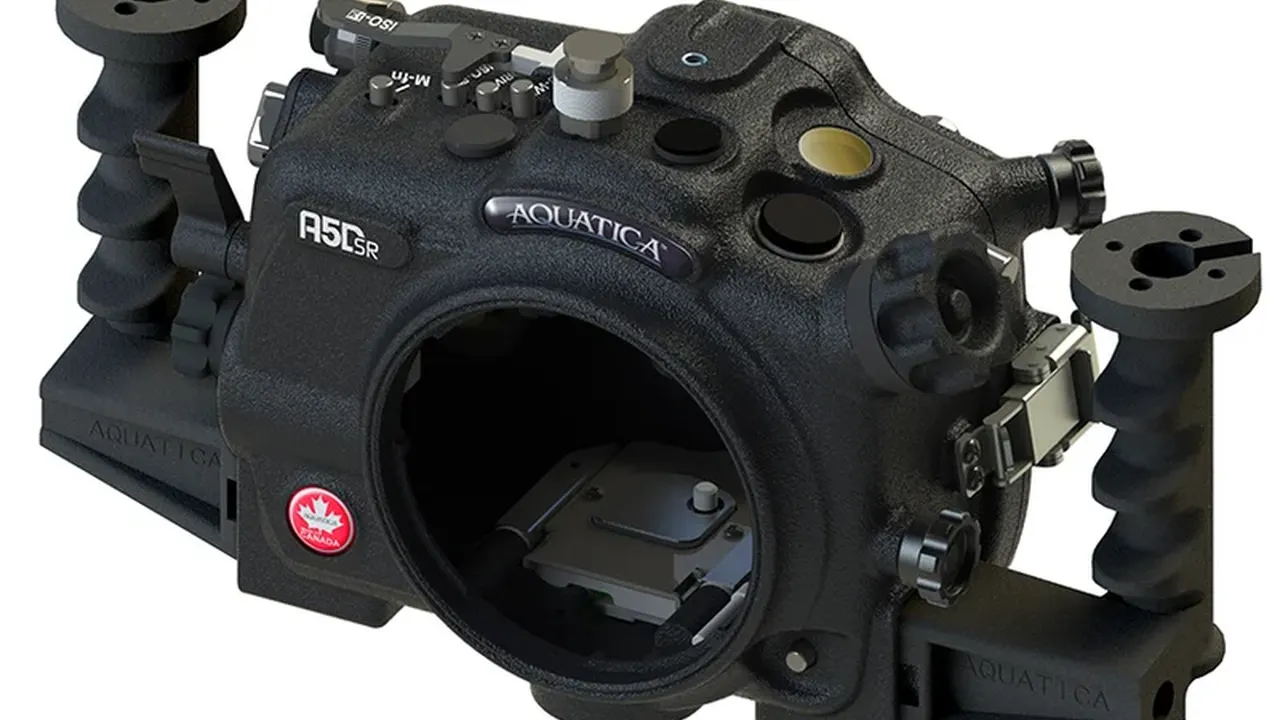
Imagine trying to hold your camera, housing, and external lights all at once underwater. It's a juggling act, a recipe for shaky shots and dropped gear. This is where trays and arms come in. They are the fundamental building blocks of any serious underwater photography setup, providing stability, ergonomics, and a platform for mounting your lighting.
Why You Need a Tray for Underwater Photography
A tray, often made of aluminum or carbon fiber, attaches to the bottom of your camera housing. It serves several vital purposes:
- Stability: It provides a wider, more stable base for your housing, making it easier to hold steady, especially in currents. This reduces camera shake, leading to sharper images.
- Ergonomics: Most trays feature comfortable handles on either side, allowing for a two-handed grip. This significantly improves handling and reduces fatigue during long dives.
- Mounting Point: The tray is where your lighting arms will attach, ensuring your strobes or video lights are positioned correctly relative to your subject.
Product Recommendations for Trays:
- Ikelite DSLR/Mirrorless Tray with Dual Handles: A popular choice for its robust construction and comfortable grip. It's versatile and compatible with a wide range of housings. Expect to pay around $200-$300.
- Nauticam Flexitray II with Handles: Known for its modularity and high-quality aluminum construction. It's a premium option that offers excellent stability and customization. Price point is typically $350-$450.
- Fantasea Line FG500 Tray with Handles: A more budget-friendly option, often bundled with compact camera housings. It's lightweight and suitable for smaller setups. Usually around $100-$150.
The Importance of Arms for Underwater Lighting
Once you have your tray, you'll need arms to extend your strobes or video lights away from your camera. This is crucial for proper lighting and avoiding backscatter (those annoying white specks in your photos caused by light reflecting off particles in the water).
- Ball and Clamp Systems: These are the most common and versatile. They consist of ball mounts on the tray, arms with ball ends, and clamps to connect them. This allows for incredible flexibility in positioning your lights.
- Flex Arms: These are flexible, segmented arms that can be bent into various positions. They are often used for smaller, lighter setups or for specific lighting angles.
Product Recommendations for Arms:
- ULCS (Ultralight Control Systems) Ball Arms: Considered the industry standard for their durability, lightweight design, and secure clamping. A typical 8-inch arm might cost $80-$100, and you'll need two for a dual strobe setup.
- Nauticam Carbon Fiber Float Arms: These arms are not only strong and lightweight but also provide buoyancy, which can help offset the negative buoyancy of your strobes. A 8-inch float arm can be $150-$200.
- Sea & Sea YS-D3 Duo Strobe Arms: Often sold as part of a system with Sea & Sea strobes, these are robust and designed for optimal light positioning. Price varies depending on length and configuration.
Wet Lenses Macro and Wide-Angle Magic
Your camera's native lens, even when paired with a housing, has limitations underwater. This is where wet lenses come in. These are external lenses that attach to the front of your housing's port, allowing you to switch between macro and wide-angle capabilities during a dive without opening your housing.
Unlocking the Tiny World with Wet Macro Lenses
If you love capturing the intricate details of nudibranchs, tiny crabs, or delicate corals, a wet macro lens is indispensable. It allows your camera to focus much closer to your subject, achieving incredible magnification.
- Diopters: These are essentially magnifying glasses that screw onto your port. They come in various strengths (+5, +10, etc.).
- Dedicated Wet Macro Lenses: These are more complex optical designs that offer superior image quality and often higher magnification than simple diopters.
Product Recommendations for Wet Macro Lenses:
- Nauticam Compact Macro Converter (CMC-1/CMC-2): These are highly regarded for their exceptional optical quality and versatility. The CMC-1 offers higher magnification, while the CMC-2 is more forgiving with focus. Expect to pay $300-$400.
- Inon UCL-165M67 / UCL-90 M67: Inon produces excellent macro lenses that are popular for their sharpness and build quality. The UCL-165M67 is a good all-around choice. Prices range from $250-$350.
- Fantasea-AOI UCL-09F / UCL-05LF: These offer good performance at a more accessible price point, making them great for beginners. Typically $150-$250.
Expanding Your View with Wet Wide-Angle Lenses
For capturing expansive reefscapes, large marine animals, or divers in their environment, a wet wide-angle lens is a game-changer. It increases your field of view, allowing you to get closer to your subject while still fitting everything into the frame, which is crucial for reducing water column between you and the subject and thus improving clarity and color.
Product Recommendations for Wet Wide-Angle Lenses:
- Nauticam Wide Angle Conversion Port (WWL-1/WWL-C): These are top-tier wet wide-angle lenses, offering incredible sharpness corner-to-corner and a very wide field of view. The WWL-1 is for full-frame and APS-C, while WWL-C is for compacts. Prices are premium, often $1,000-$1,500.
- Inon UWL-H100 28M67 Type 2: A popular choice for compact cameras, offering a good balance of wide-angle coverage and image quality. It can be paired with a dome lens for even wider coverage. Around $400-$500.
- Fantasea-AOI UWL-09F / UWL-04F: These are excellent value wide-angle lenses, especially for compact camera users. They offer a good field of view and decent sharpness. Prices typically range from $300-$500.
Lighting Solutions Strobes and Video Lights
Natural light diminishes rapidly underwater, and colors are absorbed, leaving everything looking blue or green. External lighting is not just an accessory; it's a necessity for vibrant, colorful, and sharp underwater photos and videos.
The Power of Strobes for Still Photography
Strobes (underwater flashes) are essential for still photography. They provide a burst of powerful, full-spectrum light that brings back the true colors of the underwater world and freezes motion.
- Manual vs. TTL: Some strobes offer manual power control, while others have Through-The-Lens (TTL) capabilities, which automatically adjust flash power based on the camera's metering. TTL is great for beginners, while manual offers more creative control.
- Guide Number: Indicates the power of the strobe. Higher guide numbers mean more powerful flashes.
Product Recommendations for Strobes:
- Sea & Sea YS-D3 Duo: A highly popular and versatile strobe known for its powerful output, fast recycle time, and excellent beam pattern. It offers both manual and TTL modes. Expect to pay around $800-$900 per strobe.
- Inon Z-330 / D-200: Inon strobes are renowned for their wide, even beam and robust build. The Z-330 is more powerful, while the D-200 is a great mid-range option. Prices range from $600-$800.
- Ikelite DS161 / DS160: Ikelite strobes are known for their reliability and powerful output, especially when paired with Ikelite housings for seamless TTL. Prices are typically $700-$900.
Illuminating Your Videos with Video Lights
For underwater videography, continuous video lights are crucial. They provide constant illumination, allowing your camera to capture smooth, well-exposed footage with accurate colors.
- Lumen Output: Indicates the brightness of the light. Higher lumens mean brighter light.
- Beam Angle: A wider beam angle is generally preferred for video to ensure even illumination.
- Color Temperature: Measured in Kelvin (K), this affects the warmth or coolness of the light.
Product Recommendations for Video Lights:
- Keldan Luna 8 LA-V: A professional-grade video light known for its incredibly high lumen output, wide beam, and excellent color rendition. It's a significant investment, often $2,000+.
- Light & Motion Sola Video 3000 / 4000 / 6000: These are very popular for their compact size, powerful output, and various beam angles. The number indicates the lumen output. Prices range from $500-$1,000+.
- Bigblue VL4200P / VL6500P: Bigblue lights offer a good balance of power and affordability, making them a great choice for enthusiasts. Prices are typically $300-$600.
Buoyancy and Protection Essential Gear Care
Beyond capturing images, protecting your investment and making your setup manageable underwater are key. Buoyancy accessories and protective gear are often overlooked but are incredibly important.
Managing Buoyancy with Floats and Weights
A fully rigged camera system with housing, strobes, and arms can be quite heavy and negatively buoyant. This can make it tiring to hold and difficult to maintain neutral buoyancy. Buoyancy accessories help counteract this.
- Float Arms: As mentioned earlier, carbon fiber arms can provide buoyancy.
- Buoyancy Floats: These are foam or air-filled floats that attach to your arms or housing to add positive buoyancy.
- Trim Weights: Small weights that can be added to specific parts of your system to fine-tune its balance and buoyancy.
Product Recommendations for Buoyancy:
- Nauticam Buoyancy Collars for Arms: These attach to Nauticam arms to provide additional lift. Price varies by size, typically $50-$100 per collar.
- StiX Jumbo Floats: These are popular foam floats that can be attached to arms or trays. A pair might cost $40-$60.
- Various manufacturers offer small trim weights: These are usually inexpensive, around $10-$20.
Protecting Your Investment with Cases and Covers
Your underwater photography gear is expensive and delicate. Proper protection during transport and storage is non-negotiable.
- Hard Cases: Pelican cases are the gold standard for their ruggedness, waterproof seals, and customizable foam inserts. They protect against impact, dust, and water.
- Soft Cases/Bags: For lighter travel or day trips, padded soft cases designed for camera gear offer good protection.
- Port Covers: Neoprene or plastic covers for your housing's port protect the delicate dome or flat port from scratches.
Product Recommendations for Protection:
- Pelican 1510 / 1535 Air Case: The 1510 is a classic carry-on size, while the 1535 Air is lighter. Both offer excellent protection. Prices range from $200-$300.
- Think Tank Photo Airport International V3.0: A rolling camera bag that's great for air travel, offering padded compartments for gear. Around $350-$400.
- Various Neoprene Dome Port Covers: Many housing manufacturers offer these, or you can find generic ones. Usually $20-$50.
Maintenance and Cleaning Keeping Your Gear Pristine
Underwater photography gear operates in a harsh environment. Saltwater, sand, and sun can quickly degrade your equipment if not properly cared for. Regular maintenance is crucial for longevity and preventing leaks.
Essential Cleaning Supplies for Underwater Photography Gear
After every dive, a thorough rinse and inspection are paramount.
- Freshwater Rinse Tank: A large tub or bucket filled with fresh water for soaking your gear immediately after a dive.
- Soft Towels/Microfiber Cloths: For drying your gear without leaving lint or scratches.
- Lens Cleaning Kit: Includes a blower brush, lens pen, and microfiber cloth for cleaning ports and lenses.
- O-Ring Grease and Remover Tool: Essential for lubricating and maintaining your housing's O-rings.
- Silica Gel Packets: To absorb moisture inside your housing during storage.
Product Recommendations for Maintenance:
- Pelican 1010 Micro Case (for O-ring kit): A small, waterproof case to keep your O-ring grease, spare O-rings, and remover tool. Around $20-$30.
- Zeiss Lens Cleaning Kit: High-quality cleaning solutions and cloths for delicate optics. Around $15-$25.
- Various brands of silicone grease for O-rings: Look for dive-specific silicone grease. A small tub is usually $10-$20.
Beyond the Basics Advanced Accessories for Creative Control
Once you've mastered the fundamentals, there are even more accessories that can unlock new creative possibilities and refine your workflow.
Snoots and Diffusers Shaping Your Light
For more advanced lighting techniques, snoots and diffusers are invaluable.
- Snoots: These attach to your strobe and narrow the beam of light into a concentrated spot. Perfect for highlighting specific subjects, creating dramatic effects, or isolating small creatures.
- Diffusers: These spread out the light from your strobe, creating a softer, more even illumination. Useful for reducing harsh shadows and creating a more natural look.
Product Recommendations for Light Modifiers:
- Retra LSD (Light Shaping Device) Snoot: A popular and versatile snoot system that allows for precise light control. Often $200-$300.
- Inon Snoot Set for Z-330 / D-200: Designed specifically for Inon strobes, offering various aperture sizes for different effects. Around $100-$150.
- Various Strobe Diffusers: Many strobes come with diffusers, or you can purchase aftermarket ones. Usually $30-$60.
Remote Triggers and Sync Cords Reliable Connections
To fire your strobes, you need a reliable connection to your camera.
- Fiber Optic Sync Cords: These are the most common and reliable method for triggering strobes with compact and mirrorless cameras. They transmit light pulses from the camera's built-in flash to the strobe.
- Electrical Sync Cords: Used primarily with DSLR housings, these provide a direct electrical connection for triggering strobes.
- Remote Triggers: Some advanced systems use wireless or optical remote triggers for more complex lighting setups.
Product Recommendations for Sync:
- Sea & Sea Fiber Optic Cable II: A durable and reliable fiber optic cable. Around $80-$100.
- Nauticam Universal Fiber Optic Cable: Known for its robust construction and compatibility. Around $100-$120.
- Ikelite TTL Converter and Electrical Sync Cord: For Ikelite systems, these ensure seamless TTL communication. Price varies depending on camera model, often $300-$500 for the converter.
The Takeaway Building Your Perfect Setup
Building an underwater photography system is a journey, not a destination. Start with the essentials – a good camera, housing, tray, arms, and at least one strobe or video light. Then, as your skills grow and your interests evolve, you can gradually add wet lenses, more advanced lighting, and specialized tools. Remember, the best accessories are those that help you achieve your creative vision and protect your valuable gear. Invest wisely, maintain diligently, and most importantly, enjoy the incredible process of capturing the beauty of the underwater world!
:max_bytes(150000):strip_icc()/277019-baked-pork-chops-with-cream-of-mushroom-soup-DDMFS-beauty-4x3-BG-7505-5762b731cf30447d9cbbbbbf387beafa.jpg)