Understanding Decompression Sickness and Prevention
Comprehensive guide to decompression sickness, its causes, symptoms, and effective prevention strategies.
Comprehensive guide to decompression sickness, its causes, symptoms, and effective prevention strategies.
Understanding Decompression Sickness and Prevention
What is Decompression Sickness DCS
Alright, let's talk about something super important for every diver out there: Decompression Sickness, or DCS. You might have heard it called 'the bends,' and it's basically what happens when nitrogen bubbles form in your body tissues and bloodstream because you've ascended too quickly or stayed too long at depth. Think of it like opening a soda bottle – if you open it slowly, the fizz (nitrogen) escapes gradually. But if you pop it open fast, you get a bubbly mess. That's kind of what happens inside you, and those bubbles can cause a whole lot of trouble.
When you dive, especially deeper, your body absorbs nitrogen from the air you breathe. The deeper you go and the longer you stay, the more nitrogen your body takes on. This is totally normal. The trick is to let that nitrogen out slowly and safely as you come back up to the surface. If you ascend too fast, or if you've absorbed too much nitrogen for your ascent rate, that dissolved nitrogen can come out of solution too quickly, forming bubbles. These bubbles can then get stuck in various parts of your body, leading to a range of symptoms from mild aches to severe, life-threatening conditions.
Common Causes of DCS Dive Profile and Risk Factors
So, what makes these pesky bubbles form? It's usually a combination of factors related to your dive profile and some personal risk factors. The most common cause is violating dive tables or computer limits – basically, going too deep, staying too long, or coming up too fast. But it's not always that straightforward. Sometimes, even if you stick to the rules, other things can increase your risk.
Let's break down the main culprits:
Rapid Ascent and No-Decompression Limits
This is probably the biggest one. If you shoot up to the surface like a rocket, you're not giving your body enough time to off-gas that absorbed nitrogen gradually. Every dive computer and dive table has 'no-decompression limits' – these are the maximum times you can stay at a certain depth without needing mandatory decompression stops. Exceeding these limits significantly increases your risk. Even within no-decompression limits, a slow, controlled ascent (usually no faster than 30 feet per minute, or 9 meters per minute) is crucial, especially during the last 30 feet (9 meters) where the pressure change is most significant relative to ambient pressure.
Repetitive Dives and Surface Intervals
Doing multiple dives in a day, especially deep ones, without adequate surface intervals, can also be a problem. Your body needs time on the surface to get rid of the residual nitrogen from previous dives. If you jump back in too soon, you're starting your next dive with a higher nitrogen load, which means your no-decompression limits for that dive will be shorter. Always pay close attention to your dive computer's recommendations for surface intervals.
Dehydration and Physical Exertion
Believe it or not, being dehydrated can make you more susceptible to DCS. When you're dehydrated, your blood volume decreases, which can affect how efficiently nitrogen is transported and eliminated from your body. So, drink plenty of water before, during, and after your dives – but avoid alcohol and excessive caffeine, as they can contribute to dehydration. Physical exertion, especially right after a dive, can also increase your risk. Heavy exercise can increase blood flow and bubble formation, so take it easy after your dives.
Age Obesity and Other Health Factors
Your personal physiology plays a role too. Older divers, for example, might have less efficient circulatory systems, making them more prone to DCS. Obesity is another risk factor because nitrogen is more soluble in fat tissue, meaning obese individuals can absorb and retain more nitrogen. Certain medical conditions, like patent foramen ovale (PFO), a small hole in the heart that didn't close properly after birth, can also increase your risk by allowing venous bubbles to bypass the lungs and enter arterial circulation directly. Always be honest about your health history on your dive medical forms.
Cold Water Diving and Fatigue
Diving in cold water can also increase your risk. Your body works harder to stay warm, which can affect circulation and nitrogen off-gassing. Fatigue, whether from lack of sleep or strenuous activity, can also make you more vulnerable. It's always best to dive when you're well-rested and feeling good.
Recognizing the Symptoms of DCS Early Detection is Key
Knowing the symptoms of DCS is absolutely critical because early recognition and treatment can make a huge difference in recovery. Symptoms can vary widely depending on where the bubbles form and how severe the case is. They can appear immediately after a dive, or sometimes hours later, so don't assume you're in the clear just because you feel fine right after surfacing.
Symptoms are generally categorized into Type I (less severe, usually musculoskeletal or skin-related) and Type II (more serious, involving neurological, respiratory, or circulatory systems).
Type I DCS Musculoskeletal and Cutaneous Symptoms
* **Joint Pain (The Bends):** This is the classic symptom and where the term 'the bends' comes from. It's usually a deep, aching pain in or around a joint, most commonly the elbows, shoulders, hips, or knees. It can range from mild discomfort to excruciating pain and often doesn't respond to pain relievers.
* **Skin Rash (Skin Bends or Marbling):** You might see a blotchy, reddish rash, often described as 'marbling' or 'goosebumps' on the skin, usually on the torso or shoulders. It can be itchy or feel like a burning sensation. This is caused by bubbles in the capillaries under the skin.
* **Swelling of Lymph Nodes:** Less common, but sometimes you might experience swelling in the lymph nodes, particularly in the armpits or groin.
Type II DCS Neurological Respiratory and Circulatory Symptoms
These are more serious and require immediate medical attention.
* **Neurological Symptoms:** These are very common in Type II DCS and can affect various parts of the nervous system:
* **Numbness, Tingling, or Weakness:** Often in the limbs, similar to a stroke.
* **Paralysis:** Partial or complete loss of movement.
* **Dizziness or Vertigo:** Feeling off-balance, spinning sensation.
* **Headache:** Can be severe and persistent.
* **Vision Disturbances:** Blurred vision, double vision, or tunnel vision.
* **Confusion or Memory Loss:** Difficulty thinking clearly, disorientation.
* **Difficulty Urinating:** Bladder dysfunction.
* **Unusual Fatigue:** Extreme tiredness that's disproportionate to the dive.
* **Pulmonary Symptoms (Chokes):** Bubbles in the lungs can cause:
* **Dry Cough:** Persistent, irritating cough.
* **Chest Pain:** Sharp pain, especially when breathing deeply.
* **Difficulty Breathing:** Shortness of breath.
* **Circulatory Symptoms (Shock):** In very severe cases, bubbles can affect the heart and circulation, leading to symptoms of shock:
* **Pale, Clammy Skin:** Due to poor circulation.
* **Rapid, Weak Pulse:** Heart struggling to pump blood.
* **Low Blood Pressure:** A sign of circulatory collapse.
* **Unconsciousness:** In extreme cases.
If you or your buddy experience *any* of these symptoms after a dive, even if they seem mild, assume it's DCS until proven otherwise. Don't wait! Get help immediately.
Effective Prevention Strategies for Divers
Okay, so now that we know what DCS is and what it looks like, let's focus on the good stuff: how to prevent it. Prevention is always better than cure, especially when it comes to something as serious as DCS. Most of these strategies are just good diving practices that you should be following anyway.
Adhere to Dive Computer or Table Limits
This is your golden rule. Your dive computer is your best friend for managing nitrogen loading. Always stay well within your no-decompression limits. If you're using tables, plan your dives conservatively. Many divers choose to dive 'conservatively' by staying shallower and for shorter durations than the absolute maximum allowed. This builds in an extra margin of safety.
**Product Recommendation: Dive Computers**
Modern dive computers are incredibly sophisticated and are essential tools for DCS prevention. They constantly monitor your depth and bottom time, calculate your nitrogen absorption, and provide real-time no-decompression limits, ascent rates, and mandatory safety stops. They also track your surface intervals and residual nitrogen for repetitive dives.
* **For Beginners/Budget-Friendly:**
* **Mares Puck Pro Plus:** This is a great entry-level computer. It's simple to use, has a clear display, and offers all the essential functions like current depth, max depth, dive time, no-deco time, and ascent rate. It's reliable and won't break the bank. It's a wrist-mounted computer, which is generally preferred for ease of viewing. Expect to pay around $200-$250.
* **Aqua Lung i100:** Another solid choice for beginners. It's very intuitive, has a single-button navigation, and offers two operating modes (Air and Nitrox). It's compact and durable. Price point is similar to the Mares Puck Pro Plus.
* **Mid-Range/Advanced Features:**
* **Shearwater Peregrine:** This is a fantastic choice for divers looking for more features without going full technical. It has a beautiful, large color LCD screen that's super easy to read, even in low light. It supports Air and Nitrox (up to 100% O2), has a robust algorithm (Bühlmann GF), and offers customizable conservatism settings. It's also rechargeable. This is a popular choice for recreational divers who want a high-quality, reliable computer. Expect to pay around $500-$600.
* **Suunto D5:** A stylish and feature-rich computer that looks great both in and out of the water. It has a full-color display, supports multiple gases, and offers wireless air integration (with an optional transmitter). It's very user-friendly and connects to the Suunto app for dive logging. Price is typically in the $600-$750 range.
* **High-End/Technical Diving:**
* **Shearwater Perdix 2:** This is the gold standard for many serious recreational and technical divers. It's incredibly robust, has an amazing bright AMOLED screen, supports multiple gases (Air, Nitrox, Trimix), and offers advanced features like open-circuit and closed-circuit rebreather modes. It's highly customizable and known for its reliability and user-friendliness despite its advanced capabilities. This is an investment, usually $1000+.
* **Garmin Descent Mk2i:** More than just a dive computer, this is a full-fledged smartwatch with advanced dive capabilities. It offers surface GPS, multiple dive modes (single-gas, multi-gas, gauge, apnea, spearfishing), and even air integration with Garmin's T1 transmitter. It's great for divers who want a single device for both diving and everyday life, including fitness tracking. Expect to pay $1200+.
**Comparison:**
| Feature | Mares Puck Pro Plus | Aqua Lung i100 | Shearwater Peregrine | Suunto D5 | Shearwater Perdix 2 | Garmin Descent Mk2i |
| :------------------ | :------------------ | :------------- | :------------------- | :------------------ | :------------------ | :------------------ |
| **Price Range** | $200-$250 | $200-$250 | $500-$600 | $600-$750 | $1000+ | $1200+ |
| **Display** | Segment LCD | Segment LCD | Color LCD | Color LCD | AMOLED | Color MIP |
| **Air Integration** | No | No | No | Optional Wireless | Optional Wireless | Optional Wireless |
| **Gases Supported** | Air, Nitrox | Air, Nitrox | Air, Nitrox | Air, Nitrox, Trimix | Air, Nitrox, Trimix | Air, Nitrox, Trimix |
| **Rechargeable** | No (User Replace) | No (User Replace) | Yes | Yes | No (User Replace) | Yes |
| **Target User** | Beginner | Beginner | Recreational/Advanced | Recreational/Advanced | Advanced/Technical | Recreational/Advanced |
**Usage Scenarios:**
* **Mares Puck Pro Plus / Aqua Lung i100:** Perfect for new divers or those who only dive occasionally and want a reliable, easy-to-use computer for basic recreational diving. Great for local dive trips or vacation diving where simplicity is key.
* **Shearwater Peregrine / Suunto D5:** Ideal for avid recreational divers who want more data, better readability, and potentially air integration. Excellent for dive trips where you're doing multiple dives a day and want more control over your conservatism settings. The Suunto D5 also doubles as a stylish everyday watch.
* **Shearwater Perdix 2 / Garmin Descent Mk2i:** For serious recreational divers, technical divers, or those who want the absolute best in terms of features, reliability, and data. The Perdix 2 is a dedicated dive computer for demanding dives, while the Garmin offers a blend of advanced diving features with comprehensive smartwatch capabilities, making it suitable for adventurers who want one device for all their activities.
Maintain a Slow Controlled Ascent Rate
This cannot be stressed enough. The last 30 feet (9 meters) of your ascent are the most critical because the relative pressure change is greatest. Always ascend slowly, no faster than 30 feet per minute (9 meters per minute). Many dive computers will beep or flash warnings if you ascend too quickly. Pay attention to them! Practice your buoyancy control so you can maintain a slow, steady ascent without bobbing up and down.
Perform Safety Stops
Even if your dive computer doesn't mandate a decompression stop, always perform a safety stop. A safety stop is typically 3-5 minutes at a depth of 15-20 feet (5-6 meters). This allows your body extra time to off-gas nitrogen in a controlled manner before surfacing. It's a simple, effective way to add a significant margin of safety to every dive. Think of it as a mandatory coffee break for your nitrogen.
Allow Adequate Surface Intervals
If you're doing multiple dives in a day, ensure you have sufficient surface intervals between dives. Your dive computer will calculate the minimum recommended surface interval, but longer is almost always better. Use this time to relax, rehydrate, and let your body continue to off-gas nitrogen. Don't rush into your next dive.
Stay Hydrated and Avoid Alcohol
As mentioned, dehydration is a risk factor. Drink plenty of water throughout your dive day. Avoid alcohol before and immediately after diving, as it's a diuretic and can lead to dehydration. It also impairs judgment, which is never a good thing when diving.
Avoid Strenuous Exercise Before and After Diving
Heavy physical exertion, especially within a few hours after a dive, can increase blood flow and potentially promote bubble formation. Take it easy after your dives. Save the intense workouts for your non-diving days.
Dive Within Your Training and Experience Limits
Don't push your limits. If you're a new diver, stick to shallower, simpler dives. As you gain experience and training (e.g., Advanced Open Water, Deep Diver specialty), you can gradually explore more challenging dive profiles. Never attempt a dive that's beyond your comfort level or training.
Monitor Your Health and Fitness
Be honest with yourself about your physical condition. If you're feeling unwell, fatigued, or have a cold, it's best to sit out the dive. Certain medical conditions can increase your DCS risk, so always consult a dive physician if you have any concerns.
Consider Nitrox for Extended Bottom Times
If you're certified for Nitrox (Enriched Air Nitrox), consider using it. Nitrox has a higher percentage of oxygen and a lower percentage of nitrogen than regular air. This means your body absorbs less nitrogen at a given depth, allowing for longer no-decompression limits or providing a greater margin of safety for the same dive profile. It's not a magic bullet against DCS, but it's a valuable tool for reducing nitrogen loading.
**Product Recommendation: Nitrox Compatible Dive Computers**
Most modern dive computers, especially those in the mid-range and high-end categories, are Nitrox compatible. This means they can be programmed with the oxygen percentage (EANx) of your gas mix, and they will adjust their calculations accordingly.
* **Mares Puck Pro Plus:** Yes, it's Nitrox compatible up to 99% O2.
* **Aqua Lung i100:** Yes, Nitrox compatible up to 50% O2.
* **Shearwater Peregrine:** Yes, Nitrox compatible up to 100% O2.
* **Suunto D5:** Yes, Nitrox compatible up to 99% O2.
* **Shearwater Perdix 2:** Yes, Nitrox compatible up to 100% O2.
* **Garmin Descent Mk2i:** Yes, Nitrox compatible up to 100% O2.
**Usage Scenarios for Nitrox:**
* **Extended Bottom Time:** If you want to spend more time exploring a reef at a certain depth without incurring decompression obligations, Nitrox is excellent. For example, a dive to 60 feet (18 meters) on air might have a no-deco limit of 50 minutes, but on EAN32 (32% oxygen), it could be 80 minutes or more.
* **Increased Safety Margin:** Even if you don't need extra bottom time, using Nitrox for a standard air dive profile means you're absorbing less nitrogen, effectively giving you a larger safety buffer against DCS.
* **Repetitive Dives:** Nitrox is particularly beneficial for multiple dives in a day, as it helps reduce the overall nitrogen load on your body, leading to shorter required surface intervals or safer repetitive dive profiles.
Listen to Your Body
This is perhaps the most important piece of advice. If something feels off after a dive, don't ignore it. Even if the symptoms are subtle, like unusual fatigue or a persistent ache, consider the possibility of DCS. Don't try to 'tough it out' or self-diagnose. When in doubt, seek medical attention.
What to Do if You Suspect DCS Immediate Action Protocol
Okay, despite all the prevention, sometimes things happen. If you or your buddy suspect DCS, immediate action is crucial. Time is of the essence, and proper first aid can significantly improve the outcome.
Administer 100 Percent Oxygen
This is the single most important first aid step. Get the affected diver on 100% oxygen as quickly as possible. Oxygen helps to 'wash out' nitrogen from the body, reducing bubble size and promoting their reabsorption. Most dive boats and reputable dive centers will have emergency oxygen kits. Keep the diver on oxygen until professional medical help arrives or until they are in a hyperbaric chamber.
**Product Recommendation: Emergency Oxygen Kits**
Every dive operation, and ideally every serious diver, should have access to an emergency oxygen kit. These kits typically include an oxygen cylinder, a regulator, and a non-rebreather mask.
* **DAN (Divers Alert Network) Oxygen Unit:** DAN is a global leader in dive safety and offers various oxygen units. Their 'Rescue Pak' or 'Remote Emergency Oxygen' (REO2) units are popular. They are designed for ease of use in emergency situations, often coming with a demand valve and a non-rebreather mask. They are robust and reliable. Prices vary depending on the cylinder size and components, but expect to pay $500-$1000 for a complete kit.
* **Local Dive Shop Kits:** Many dive shops also assemble their own emergency oxygen kits using standard medical oxygen components. Ensure it includes a large enough cylinder (at least a D or E size for sufficient duration), a medical-grade regulator, and a non-rebreather mask. Make sure you know how to assemble and use it.
**Usage Scenarios:**
* **Dive Boats:** Essential for any dive boat, regardless of size. Should be easily accessible and clearly marked.
* **Remote Dive Sites:** Crucial for shore dives or locations far from medical facilities.
* **Dive Centers:** All dive centers should have multiple units available for their staff and customers.
**Important Note:** Having an oxygen kit is one thing; knowing how to use it is another. Take an emergency oxygen provider course (offered by DAN, PADI, SSI, etc.) to learn proper assembly, administration, and safety procedures.
Contact Emergency Medical Services
Call for emergency medical help immediately. In many dive destinations, there will be specific emergency numbers for dive accidents (e.g., DAN hotline). Provide clear and concise information about the diver's symptoms, dive profile, and location. Follow their instructions.
Keep the Diver Lying Down
Position the diver lying down, preferably on their back. If they are unconscious or vomiting, place them in the recovery position. Keep them warm and comfortable.
Monitor Vital Signs
Continuously monitor the diver's breathing, pulse, and level of consciousness. Be prepared to administer CPR if necessary (if you are trained).
Transport to a Hyperbaric Chamber
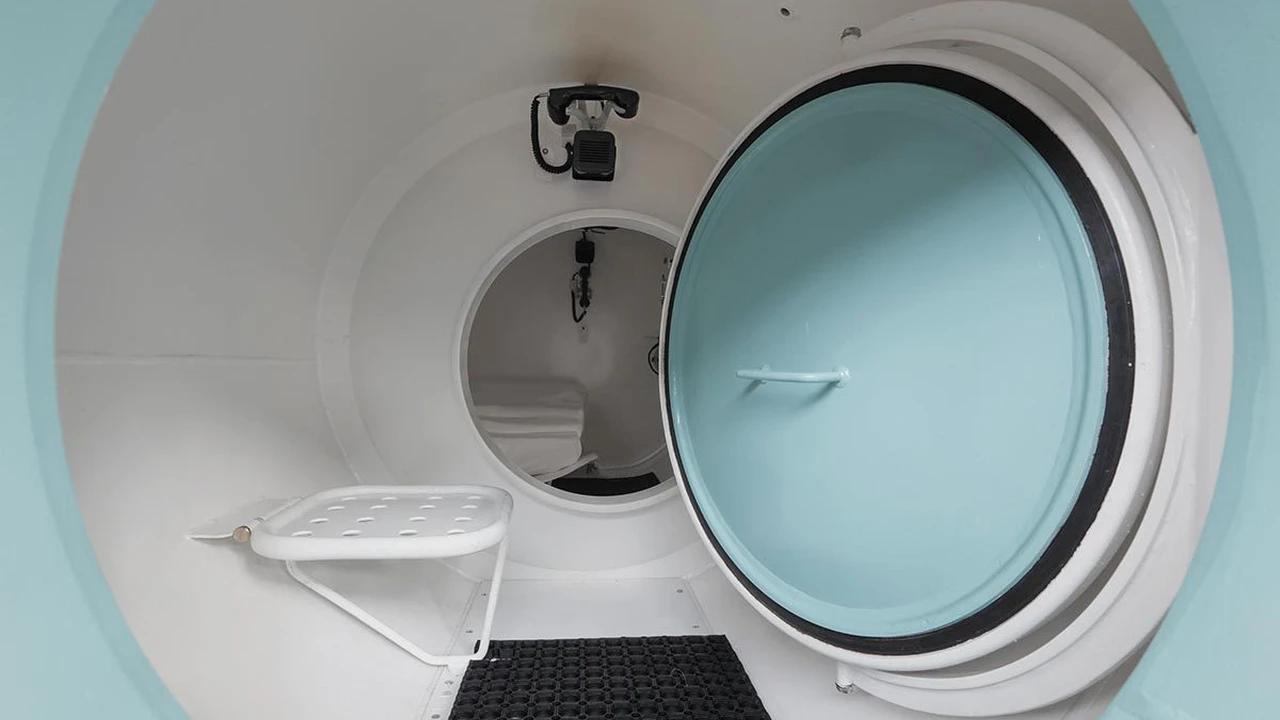
The definitive treatment for DCS is recompression in a hyperbaric chamber. This involves placing the diver in a sealed chamber where the pressure is increased, simulating a return to depth. This high-pressure environment helps to re-dissolve the nitrogen bubbles back into solution. Once the bubbles are gone, the pressure is slowly reduced, allowing the nitrogen to off-gas safely. It's crucial to get the diver to a chamber as quickly as possible, but only after initial first aid and consultation with medical professionals.
Do Not Re-Enter the Water
Never, ever put a diver suspected of having DCS back in the water for 'in-water recompression.' This is extremely dangerous, uncontrolled, and can worsen the condition. It's not a substitute for proper hyperbaric treatment.
Living a Dive Life Safely and Responsibly
Decompression sickness is a serious concern for divers, but with proper education, adherence to safe diving practices, and the right equipment, the risk can be significantly minimized. It's all about understanding the physics, respecting your limits, and being prepared for the unexpected.
Remember, diving is an incredible activity that opens up a whole new world. By being a responsible and informed diver, you can enjoy countless safe and memorable underwater adventures. Always prioritize safety, listen to your body, and never hesitate to seek help if something feels wrong. Happy diving!
:max_bytes(150000):strip_icc()/277019-baked-pork-chops-with-cream-of-mushroom-soup-DDMFS-beauty-4x3-BG-7505-5762b731cf30447d9cbbbbbf387beafa.jpg)