Scuba Diving in Currents How to Dive Safely
Strategies and techniques for safely navigating and enjoying dives in strong underwater currents.
Strategies and techniques for safely navigating and enjoying dives in strong underwater currents.
Scuba Diving in Currents How to Dive Safely
Diving in currents can be one of the most exhilarating and rewarding experiences in scuba diving. Imagine drifting effortlessly along a vibrant coral wall, watching pelagic fish cruise by, or being carried gently over a pristine reef. Currents, often driven by tides, ocean gyres, or even local topography, bring nutrient-rich water, attracting an abundance of marine life. This is why some of the world's most famous dive sites, like Sipadan's Barracuda Point, Komodo's Batu Bolong, or Palau's Blue Corner, are renowned for their strong currents and the incredible biodiversity they support. However, currents also present unique challenges and potential hazards. Understanding how to safely navigate and enjoy these dynamic environments is crucial for any diver looking to expand their skills and explore more of the underwater world.
Understanding Different Types of Underwater Currents
Not all currents are created equal. Recognizing the type of current you're encountering is the first step in developing an appropriate dive plan and executing it safely. Let's break down the common types:
Drift Currents and Gentle Flow
These are perhaps the most enjoyable and least challenging. Drift currents involve a steady, predictable flow that carries you along. Think of it as a lazy river ride underwater. They are common in areas with consistent tidal movements or broad ocean currents. The key here is to relax, maintain neutral buoyancy, and let the current do the work. These are ideal for seeing a lot of ground without much effort, and they often lead to spectacular encounters with larger marine life that congregates in the flow.
Rip Currents and Strong Surface Flow
While often associated with beaches, rip currents can also occur near shorelines or narrow passages underwater. They are strong, narrow currents that flow away from the shore. For divers, these are less common in open water but can be a concern during entry or exit from shore dives, or near channels. Strong surface currents can also make boat entry and exit challenging, requiring careful timing and coordination with the boat crew.
Downcurrents and Upcurrents Vertical Water Movement
These are perhaps the most dangerous types of currents for divers. Downcurrents pull you downwards, potentially to depths beyond your planned limits or even into thermoclines or colder water. Upcurrents push you upwards, risking uncontrolled ascents and potential decompression sickness. Both are often found near pinnacles, seamounts, or steep walls where water is forced to move vertically. Recognizing the signs – sudden changes in buoyancy, feeling pulled up or down, or seeing marine debris moving vertically – is critical. Immediate action, such as finning strongly against the current or seeking shelter, is necessary.
Turbulence and Eddies Swirling Water
Turbulence occurs when water flows over irregular topography, creating unpredictable swirling patterns. Eddies are localized circular currents. These can be disorienting and make buoyancy control difficult. They are often found behind obstacles like large rocks or coral bommies. While not as dangerous as downcurrents, they can be frustrating and require constant attention to buoyancy and trim.
Essential Gear for Current Diving Enhancing Safety and Control
While your standard dive gear is sufficient for most dives, certain items become invaluable when dealing with currents. Investing in or ensuring you have access to these can significantly enhance your safety and enjoyment.
Surface Marker Buoy SMB and Reel
An SMB is non-negotiable for current diving. If you surface away from the boat, or if the current carries you further than anticipated, an SMB makes you visible to the boat crew. A good quality SMB, preferably a closed-circuit one that can be inflated from depth, and a reliable reel with at least 100 feet of line are essential. For example, the Mares All in One SMB (around $60-80) is a popular choice for its durability and ease of use, often coming with a compact reel. Another excellent option is the ScubaPro Safety Marker Buoy (around $70-90), known for its bright color and robust construction. When choosing a reel, look for one with a comfortable handle and a smooth winding mechanism, like the Hollis Finger Spool (around $20-30) for shorter deployments or the Dive Rite Sidewinder Reel (around $80-100) for longer lines and more demanding situations.
Reef Hook or Current Hook
A reef hook allows you to anchor yourself to a rock or dead coral (never live coral!) in strong currents, allowing you to relax and observe marine life without finning constantly. This is particularly useful at dive sites known for strong, consistent currents where you want to stay in one spot. The Oceanic Current Hook (around $20-30) is a simple yet effective design. Some divers prefer a double-ended hook for added stability. Always ensure you attach it to a secure, non-living part of the reef to avoid damaging the ecosystem. Remember, a reef hook is for observation, not for pulling yourself through the current.
Powerful Fins and Proper Finning Techniques
While not a separate piece of gear, having fins that provide good propulsion is crucial. Open-heel fins with a stiff blade, like the ScubaPro Jet Fins (around $180-220) or the Mares Avanti Quattro Plus (around $150-190), are excellent choices for current diving. Beyond the gear, mastering finning techniques like the frog kick or modified flutter kick can significantly improve your efficiency and ability to move against or across currents. The frog kick, in particular, is excellent for propulsion with minimal disturbance to the environment.
Audible Signaling Device
A whistle or an air horn attached to your BCD can be a lifesaver if you surface far from the boat or need to attract attention. The Storm Whistle (around $10-15) is incredibly loud and effective. An air horn, like the Aqua Lung Air Alert (around $50-70), uses your BCD's air supply to create a piercing sound, audible over long distances.
Pre-Dive Planning and Briefing for Current Dives
Thorough planning is paramount when currents are expected. Never underestimate the power of moving water.
Checking Current Forecasts and Local Knowledge
Before any dive, especially in areas known for currents, consult local dive operators or guides. They have invaluable knowledge about typical current patterns, tidal influences, and recent conditions. Websites like NOAA Tides & Currents (for US waters) or local marine weather forecasts can also provide useful data. Ask about the expected direction, strength, and duration of the current.
Discussing Entry and Exit Strategies
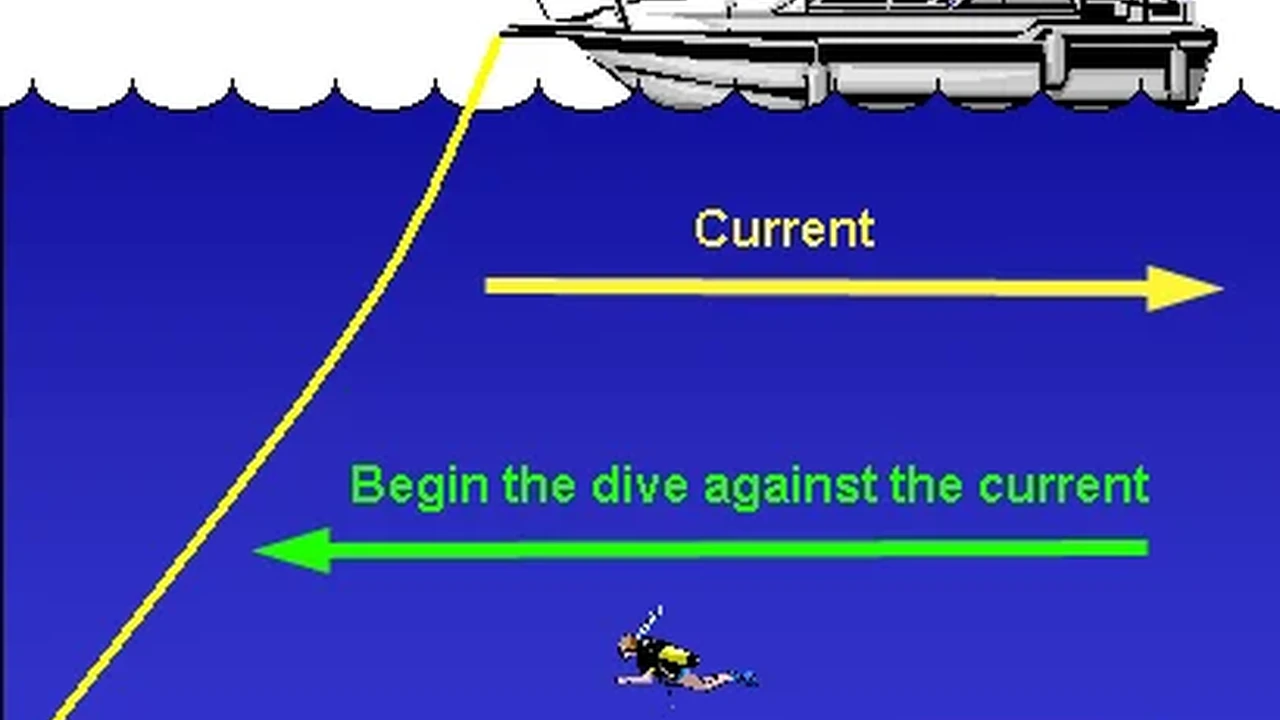
How will you enter the water? A negative entry (descending immediately upon entering the water) is often preferred in strong currents to avoid being swept away on the surface. Where will you exit? Will the boat pick you up at a specific point, or will it follow your SMB? Clear communication with the boat captain and dive guide is essential.
Buddy System and Communication Signals
The buddy system is even more critical in currents. Stay close to your buddy. Review hand signals for 'current,' 'upcurrent,' 'downcurrent,' 'stay together,' and 'surface.' Discuss what to do if you get separated – typically, look for 30 seconds, then surface, deploy SMB, and wait for pickup.
Contingency Plans and Emergency Procedures
What if the current is stronger than expected? What if someone gets swept away? Discuss alternative dive sites, emergency ascent procedures, and how the boat will track and pick up divers. Knowing these plans beforehand reduces panic and improves response time.
Techniques for Diving Safely in Currents Mastering Buoyancy and Movement
Once in the water, specific techniques will help you manage and even enjoy the current.
Maintaining Neutral Buoyancy and Streamlining
Perfect buoyancy control is always important, but it's absolutely critical in currents. Being slightly negative will help you stay down, but too negative will make you work harder. Aim for neutral buoyancy, allowing you to drift effortlessly. Streamlining your gear – tucking hoses, securing gauges – reduces drag and makes you more efficient in the water.
Swimming Against and Across Currents
Sometimes you'll need to swim against the current to reach a specific point or to avoid being swept past a landmark. This requires strong, efficient finning. When swimming across a current, aim slightly upstream, similar to how a boat crosses a river. This 'crabbing' technique allows you to make progress without being pushed too far downstream.
Using Natural Shelters and Topography
Look for areas of reduced current, often found behind large coral bommies, rocks, or within crevices. These 'eddies' or 'current shadows' can provide a welcome respite from the flow, allowing you to rest, regroup, or observe marine life up close. However, be aware that the current can change direction or strength unexpectedly, so always be ready to move.
Drift Diving Techniques and Safety Protocols
Drift diving is a fantastic way to cover a lot of ground with minimal effort. The key is to relax and let the current carry you. The dive boat will typically follow your group, picking you up at the end of the dive. Maintain good communication with your buddy and the dive guide. Deploy your SMB as you begin your safety stop or ascent to ensure the boat can easily spot you. Always ascend slowly and control your buoyancy, as the current can affect your ascent rate.
Managing Air Consumption in Currents
Finning against a strong current can significantly increase your air consumption. Monitor your air gauge frequently. If you find yourself working too hard, consider changing your dive plan, seeking shelter, or signaling to your buddy and guide that you need to ascend. It's better to end a dive early than to run low on air in a challenging situation.
Post-Dive Procedures and Debriefing
The dive isn't over until you're safely back on the boat and your gear is stowed.
Safe Ascent and Surface Procedures
As you ascend, remember that the current can still affect you. Maintain a slow, controlled ascent rate. Deploy your SMB well before surfacing, ideally at your safety stop, to give the boat ample time to approach. Once on the surface, keep your mask on and regulator in until you are safely on the boat. Signal clearly to the boat crew.
Boat Pickup in Current Conditions
Boat pickups in currents require coordination. The boat captain will approach carefully, often positioning the boat to create a 'current shadow' for divers to grab onto. Be ready to grab the line or ladder quickly. If there are multiple divers, wait your turn patiently and avoid rushing. If the current is very strong, the boat may deploy a trailing line for divers to hold onto as they make their way to the ladder.
Debriefing and Learning from the Experience
After the dive, take time to debrief with your buddy and dive guide. Discuss what went well, what challenges you faced, and what you learned. This reflection is crucial for improving your current diving skills and confidence for future dives.
Advanced Current Diving Considerations
For experienced divers, there are further considerations and training opportunities.
Specialty Courses for Current Diving
Many dive agencies offer specialty courses like PADI Drift Diver or SSI Waves, Tides & Currents. These courses provide in-depth knowledge and practical experience in managing various current conditions, enhancing your skills and confidence. They cover advanced planning, specific techniques, and emergency procedures tailored to current diving.
Understanding Tidal Charts and Local Geography
A deeper understanding of how tides, moon phases, and local underwater topography influence currents can help you predict and plan for specific conditions. Learning to read tidal charts and understanding the bathymetry of a dive site can give you a significant advantage.
The Thrill of Current Diving and Marine Life Encounters
Ultimately, mastering current diving opens up a world of incredible experiences. These dynamic environments are often teeming with life – schooling barracuda, hunting sharks, majestic manta rays, and vibrant soft corals. By understanding the risks and applying the right techniques, you can safely enjoy some of the most spectacular and exhilarating dives the ocean has to offer. Embrace the flow, respect the power of the ocean, and you'll unlock a new dimension of underwater exploration.
:max_bytes(150000):strip_icc()/277019-baked-pork-chops-with-cream-of-mushroom-soup-DDMFS-beauty-4x3-BG-7505-5762b731cf30447d9cbbbbbf387beafa.jpg)