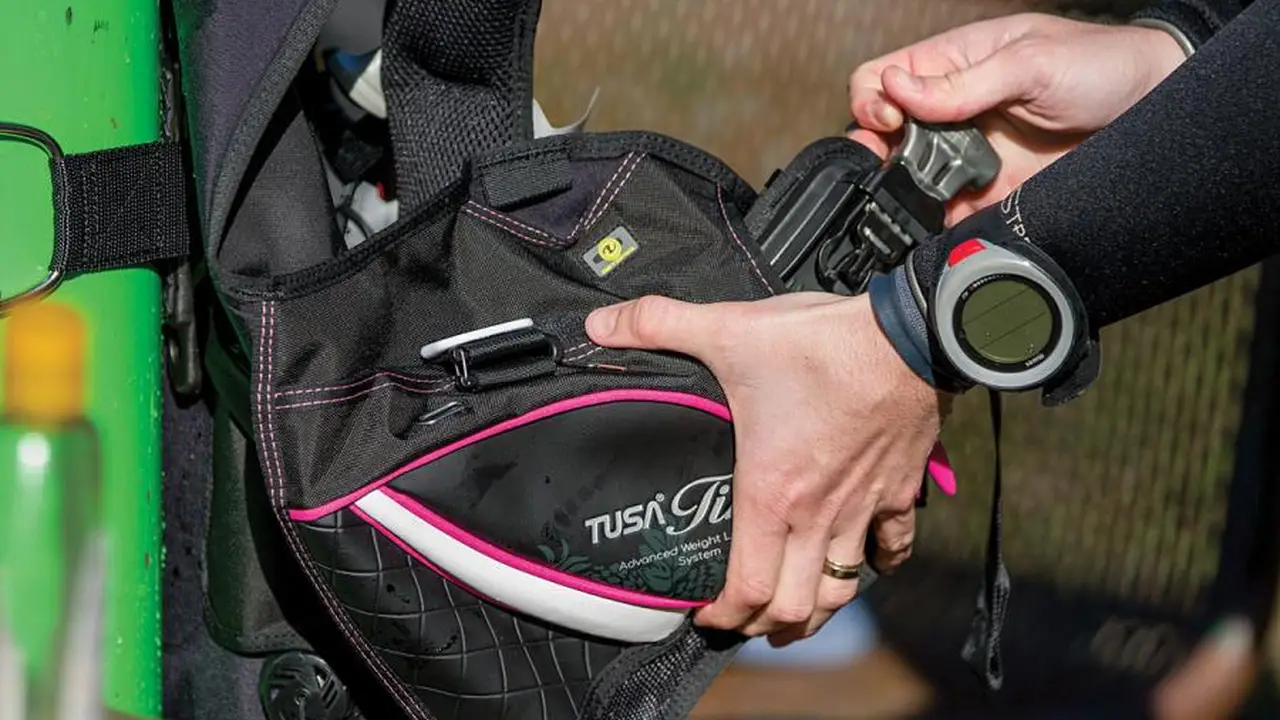
Essential Scuba Diving Safety Tips for Every Diver
{ "article": [ { "title": "Essential Scuba Diving Safety Tips for Every Diver", "meta_description": "Key safety guidelines and practices to ensure a safe and enjoyable scuba diving experience.", "content": "Key safety guidelines and practices to ensure a safe and enjoyable scuba diving experience.\n\n
\n\n
Scuba diving is an incredible adventure, offering a unique window into the underwater world. From vibrant coral reefs to mysterious shipwrecks, the allure of exploring beneath the waves is undeniable. However, like any adventure sport, scuba diving comes with inherent risks. Ensuring your safety, and the safety of your dive buddy, is paramount. This comprehensive guide will walk you through essential safety tips, from pre-dive preparations to emergency procedures, helping you become a more confident and responsible diver.
\n\nUnderstanding Your Limits and Training for Safe Diving
\n\nOne of the most fundamental aspects of dive safety is knowing and respecting your personal limits. This isn't just about depth or bottom time; it's about your physical and mental state, your experience level, and your comfort zone. Never feel pressured to exceed what you're comfortable with, regardless of what others are doing.
\n\nInitial Certification and Beyond: PADI SSI NAUI
\n\nYour journey into safe diving begins with proper certification. Agencies like PADI (Professional Association of Diving Instructors), SSI (Scuba Schools International), and NAUI (National Association of Underwater Instructors) offer globally recognized courses. These entry-level certifications, typically Open Water Diver, teach you the foundational skills: equipment use, buoyancy control, emergency procedures, and dive planning. It's crucial to choose a reputable instructor and a course that emphasizes practical skills and safety.
\n\nBut learning doesn't stop after your initial certification. Advanced courses, such as Advanced Open Water, Rescue Diver, and various specialty certifications (e.g., Deep Diver, Wreck Diver, Enriched Air Nitrox), significantly enhance your skills and knowledge. For instance, the Rescue Diver course is highly recommended as it focuses on preventing and managing dive accidents, making you a more capable and confident diver, not just for yourself but for others.
\n\nMedical Fitness for Diving Health Considerations
\n\nBefore you even dip a toe in the water, it's vital to ensure you are medically fit to dive. Certain medical conditions can pose significant risks underwater. These include, but are not limited to, respiratory issues (asthma, emphysema), cardiovascular problems, ear and sinus conditions, and neurological disorders. Most certification agencies require you to complete a medical questionnaire. If you answer 'yes' to any of the questions, you'll need to consult with a doctor, preferably one specializing in dive medicine, to get clearance. Never dive if you are feeling unwell, fatigued, or under the influence of alcohol or drugs. Your body's ability to cope with the underwater environment is directly linked to your overall health.
\n\nPre Dive Preparations and Equipment Checks for Secure Dives
\n\nThe dive starts long before you enter the water. Thorough pre-dive preparations and meticulous equipment checks are non-negotiable for a safe dive.
\n\nGear Inspection and Maintenance Regulator BCD Mask Fins
\n\nYour dive gear is your life support system underwater, so it must be in perfect working order. Before every dive, perform a thorough inspection:
\n- \n
- Regulator: Check for any leaks, ensure the second stage purges correctly, and that the air flows freely. Test your alternate air source (octopus) as well. \n
- BCD (Buoyancy Control Device): Inflate and deflate it fully to check for leaks in the bladder and proper functioning of the inflator/deflator mechanisms. Ensure all straps and buckles are secure. \n
- Mask: Check for cracks or damage to the skirt and lens. Ensure the strap is not frayed. \n
- Fins: Inspect for cracks or tears, especially around the foot pocket and straps. \n
- Cylinders: Check the visual inspection (VIP) sticker and hydrostatic test date. Ensure the O-ring is in good condition and the valve opens smoothly. \n
- Dive Computer: Check battery life and ensure it's set to the correct gas mix (air or nitrox). \n
Regular professional servicing of your regulator and BCD, typically annually, is also crucial. Proper rinsing with fresh water after every dive and storing your gear correctly will extend its lifespan and ensure its reliability.
\n\nBuddy System and Pre Dive Safety Check BWRAF
\n\nThe buddy system is a cornerstone of dive safety. You and your buddy are responsible for each other's safety. Before entering the water, perform a comprehensive pre-dive safety check, often remembered by the acronym BWRAF (or similar variations):
\n- \n
- B - BCD: Check that your buddy's BCD inflates and deflates properly, and that the low-pressure inflator hose is connected. \n
- W - Weights: Ensure your buddy has their weights on and that the quick-release mechanism is accessible and functional. \n
- R - Releases: Check all quick-release buckles on the BCD, ensuring they are properly fastened and easily released. \n
- A - Air: Confirm your buddy's air is turned on fully and that they have sufficient pressure. Take a few breaths from their primary and alternate air sources. \n
- F - Final Check: Do a final visual check of all gear, ensuring hoses are tucked away, mask is clear, and fins are ready. \n
Beyond the physical check, discuss your dive plan with your buddy: maximum depth, bottom time, air consumption limits, emergency procedures, and hand signals. Communication is key.
\n\nDive Planning and Environmental Awareness Currents Visibility Marine Life
\n\nA well-executed dive plan is essential. Consider:
\n- \n
- Dive Site Conditions: Research the site. What are the typical currents? What's the visibility like? Are there any potential hazards (e.g., strong surge, boat traffic)? \n
- Weather: Check the forecast. Rough seas can make entry and exit challenging and increase the risk of seasickness. \n
- Depth and Time Limits: Adhere to your dive computer's no-decompression limits. Plan your deepest point first and gradually ascend throughout the dive. \n
- Air Management: Establish turn-around pressures (e.g., turn around at 1500 psi, ascend at 1000 psi, surface with 500 psi). \n
- Marine Life: Be aware of local marine life. Know which creatures to avoid touching (e.g., lionfish, stonefish) and how to react if you encounter potentially dangerous animals (e.g., sharks). Never harass or feed marine life. \n
During the Dive Buoyancy Control Air Management Emergency Procedures
\n\nOnce you're in the water, maintaining awareness and control is crucial.
\n\nBuoyancy Control and Trim Neutral Buoyancy
\n\nMastering neutral buoyancy is perhaps the most important skill in diving. It allows you to hover effortlessly, conserve air, protect the marine environment, and reduce your risk of uncontrolled ascents or descents. Practice regularly to fine-tune your weighting and body position (trim). Aim to be perfectly horizontal in the water, minimizing drag and allowing for efficient propulsion.
\n\nAir Consumption Monitoring and Ascent Rates Safety Stops
\n\nConstantly monitor your air supply. Check your SPG (Submersible Pressure Gauge) frequently. Don't wait until you're low on air to start thinking about surfacing. Stick to your pre-planned turn-around pressures. When ascending, always maintain a slow, controlled rate (no faster than 30 feet per minute or as indicated by your dive computer) to prevent decompression sickness. A 3-minute safety stop at 15-20 feet (5-6 meters) is highly recommended on every dive, even if not required by your computer, to off-gas nitrogen and reduce risk.
\n\nHand Signals and Underwater Communication
\n\nEffective communication with your buddy is vital. Review standard hand signals before the dive. These include signals for 'OK,' 'something is wrong,' 'low on air,' 'out of air,' 'go up,' 'go down,' 'stay here,' and 'buddy check.' If you have any issues, signal your buddy immediately. Don't wait for a problem to escalate.
\n\nResponding to Emergencies Out of Air Entanglement Cramps
\n\nWhile prevention is key, knowing how to respond to emergencies is equally important. This is where your Rescue Diver training truly shines. Common emergencies include:
\n- \n
- Out of Air: Signal your buddy immediately, get their attention, and share air from their alternate air source. \n
- Entanglement: Carry a dive knife or line cutter. If entangled, remain calm and slowly work to free yourself. If you can't, signal your buddy for help. \n
- Cramps: Signal your buddy. Stretch the affected muscle. If severe, you may need to surface. \n
- Equipment Malfunction: Signal your buddy. Depending on the malfunction, you may need to abort the dive. \n
- Buddy Separation: If you lose your buddy, search for no more than one minute (30 seconds in low visibility) by doing a 360-degree turn. If you don't find them, slowly ascend to the surface. \n
Always remember the golden rule: 'Stop, Think, Act.' Don't panic. Assess the situation, think through your options, and then take appropriate action.
\n\nPost Dive Procedures and Continued Learning for Safer Diving
\n\nSafety doesn't end when you surface. Post-dive procedures are just as important.
\n\nLogging Dives and Monitoring Your Health
\n\nLog every dive. This helps you track your experience, air consumption, and equipment performance. It's also a good habit for future dive planning. After diving, monitor your health for any unusual symptoms, especially those related to decompression sickness (DCS), such as joint pain, numbness, or unusual fatigue. If you suspect DCS, seek immediate medical attention and inform them you've been diving.
\n\nEquipment Care and Storage
\n\nRinse all your gear thoroughly with fresh water after every dive, especially in saltwater environments. This prevents salt crystal buildup and corrosion. Dry your gear completely before storing it in a cool, dry place away from direct sunlight. Proper care extends the life of your equipment and ensures it's ready for your next adventure.
\n\nContinuing Education and Skill Refinement
\n\nNever stop learning. Take specialty courses that interest you, participate in dive refreshers if you haven't dived in a while, and seek out opportunities to dive with more experienced divers. The more you dive and learn, the more confident and safer you will become.
\n\nRecommended Safety Gear and Products for Every Diver
\n\nWhile your basic gear covers the essentials, certain safety accessories can significantly enhance your dive safety. Here are a few highly recommended items, along with specific product examples and their typical price ranges:
\n\nDive Computers Essential Safety Devices
\n\nA dive computer is arguably the most important piece of safety equipment after your regulator. It tracks your depth, bottom time, ascent rate, and no-decompression limits, providing real-time data to keep you safe. Most also include a safety stop timer and log your dives.
\n\n- \n
- Entry-Level: Aqua Lung i300C\n
- \n
- Features: Bluetooth connectivity for easy logbook transfer, user-changeable battery, four operating modes (Air, Nitrox, Gauge, Free Dive), backlight. \n
- Use Case: Perfect for new divers or those looking for a reliable, straightforward computer without too many complex features. Good for recreational diving up to 100 feet. \n
- Comparison: Simpler interface than advanced models, but provides all essential safety data. Lacks air integration. \n
- Price: $300 - $400 USD \n
\n - Mid-Range: Shearwater Peregrine\n
- \n
- Features: Full-color LCD screen, intuitive menu system, multiple dive modes (Air, Nitrox, 3 Gas Nitrox, Gauge), rechargeable battery, Bluetooth. \n
- Use Case: Ideal for divers progressing to Nitrox or those who appreciate a clear, easy-to-read display. Suitable for recreational and some technical diving. \n
- Comparison: Offers more advanced features and a superior display compared to entry-level models, but still lacks air integration. Excellent value for its capabilities. \n
- Price: $500 - $650 USD \n
\n - High-End (Air Integrated): Garmin Descent Mk2i\n
- \n
- Features: Air integration (monitors tank pressure wirelessly), GPS for surface navigation, multi-sport smartwatch functions, heart rate tracking, multiple dive modes (single and multi-gas, CCR, gauge, spearfishing, freediving). \n
- Use Case: For serious divers who want comprehensive data, air integration, and a versatile smartwatch for daily use. Great for travel and advanced diving. \n
- Comparison: Top-tier features, including air integration and GPS, making it a complete dive and lifestyle companion. Higher price point reflects its advanced capabilities. \n
- Price: $1300 - $1600 USD (with transmitter) \n
\n
Surface Signaling Devices SMB Whistle Mirror
\n\nBeing visible on the surface is critical, especially if you drift away from the boat or shore. These devices ensure you can be seen and heard.
\n\n- \n
- SMB (Surface Marker Buoy) / Safety Sausage:\n
- \n
- Product: Mares XR SMB\n
- \n
- Features: Bright orange or yellow, often with reflective tape, easily inflatable at depth or on the surface. Some have an over-pressure relief valve. \n
- Use Case: Deploys at the end of a dive to signal your position to the boat. Essential for drift dives or in areas with boat traffic. \n
- Comparison: Various sizes and inflation methods. The Mares XR is durable and highly visible. \n
- Price: $40 - $80 USD \n
\n
\n - Product: Mares XR SMB\n
- Dive Whistle:\n
- \n
- Product: Fox 40 Classic Whistle\n
- Features: Loud, pea-less design for reliability, attaches easily to BCD.
- Use Case: Used on the surface to attract attention, especially if the boat is far away or in noisy conditions.
- Comparison: Simple, effective, and inexpensive. A must-have.
- Price: $5 - $15 USD
- Product: Fox 40 Classic Whistle\n
- Signal Mirror:\n
- \n
- Product: UST StarFlash Signal Mirror\n
- \n
- Features: Highly reflective, durable, often includes a sighting hole for accurate aiming. \n
- Use Case: Reflects sunlight to create a bright flash visible for miles, ideal for long-distance signaling in sunny conditions. \n
- Comparison: A low-tech but highly effective backup signaling device. \n
- Price: $10 - $25 USD \n
\n
\n - Product: UST StarFlash Signal Mirror\n
Cutting Tools Dive Knife Line Cutter
\n\nEntanglement in fishing lines, nets, or even kelp is a real risk. A cutting tool is a vital safety accessory.
\n\n- \n
- Dive Knife:\n
- \n
- Product: Aqua Lung Squeeze Lock Knife\n
- \n
- Features: Blunt tip (safer for prying), serrated and straight edges, line cutter, easy-to-use squeeze-lock sheath. Available in various sizes. \n
- Use Case: General purpose cutting tool for lines, nets, or prying. Can be mounted on BCD or hose. \n
- Comparison: Many brands offer similar designs. The Squeeze Lock is popular for its secure sheath and easy release. \n
- Price: $50 - $80 USD \n
\n
\n - Product: Aqua Lung Squeeze Lock Knife\n
- Line Cutter:\n
- \n
- Product: Halcyon Explorer Line Cutter\n
- \n
- Features: Small, sharp ceramic blade, often comes with a sheath that can be mounted on webbing. \n
- Use Case: Specifically designed for quickly cutting fishing line, monofilament, or thin ropes. Safer and faster for fine lines than a knife. \n
- Comparison: More specialized than a knife, but incredibly effective for its intended purpose. Many divers carry both. \n
- Price: $20 - $40 USD \n
\n
\n - Product: Halcyon Explorer Line Cutter\n
Audible Signaling Devices Tank Banger Air Horn
\n\nGetting your buddy's attention underwater can be challenging. Audible signals help cut through the ambient noise.
\n\n- \n
- Tank Banger:\n
- \n
- Product: Innovative Scuba Concepts Tank Banger\n
- \n
- Features: Small, elastic band with a hard plastic or metal ball that strikes the tank. \n
- Use Case: Creates a loud, distinct sound underwater to get your buddy's attention or signal a problem. \n
- Comparison: Simple, effective, and doesn't require air from your tank. \n
- Price: $10 - $20 USD \n
\n
\n - Product: Innovative Scuba Concepts Tank Banger\n
- Underwater Air Horn:\n
- \n
- Product: ScubaAlert by Dive Alert Plus V2\n
- \n
- Features: Connects to your BCD inflator hose, uses a small amount of air to create a very loud sound both underwater and on the surface. \n
- Use Case: Excellent for getting attention from a distance, especially useful for dive leaders or in low visibility. \n
- Comparison: Louder than a tank banger, but consumes a small amount of air. Very effective for surface signaling too. \n
- Price: $60 - $90 USD \n
\n
\n - Product: ScubaAlert by Dive Alert Plus V2\n
First Aid Kit and Emergency Oxygen
\n\nWhile you might not carry a full emergency oxygen kit on every dive, knowing where one is and how to use it is crucial. A personal first aid kit is always a good idea.
\n\n- \n
- Personal Dive First Aid Kit:\n
- \n
- Product: DAN (Divers Alert Network) Mini First Aid Kit\n
- \n
- Features: Compact, waterproof bag containing essentials like bandages, antiseptic wipes, pain relievers, sting relief, and basic wound care. \n
- Use Case: For minor cuts, scrapes, stings, or headaches that can occur before, during, or after a dive. \n
- Comparison: Many brands offer dive-specific kits. DAN's is well-regarded for its relevance to dive injuries. \n
- Price: $30 - $60 USD \n
\n
\n - Product: DAN (Divers Alert Network) Mini First Aid Kit\n
- Emergency Oxygen Kit:\n
- \n
- Product: DAN Oxygen Unit (e.g., Rescue Pak)\n
- \n
- Features: Portable oxygen cylinder, regulator, and non-rebreather mask. Designed for administering 100% oxygen to a diver suspected of DCS or other dive-related injuries. \n
- Use Case: Typically carried by dive operators, boats, or dive centers. Essential for initial treatment of DCS. Divers should know how to operate one. \n
- Comparison: Various sizes and configurations. DAN is a leading authority in dive safety and their kits are standard. \n
- Price: $500 - $1000+ USD (for a complete unit, often rented or provided by dive ops) \n
\n
\n - Product: DAN Oxygen Unit (e.g., Rescue Pak)\n
Remember, owning these items is only half the battle. You must know how to use them effectively. Regular practice and continuing education are the best investments in your dive safety.
\n\nFinal Thoughts on Responsible and Safe Diving Practices
\n\nScuba diving is a privilege, offering access to an incredible world. With that privilege comes responsibility – responsibility for your own safety, for your buddy's safety, and for the health of the marine environment. By adhering to these essential safety tips, continuously refining your skills, and investing in appropriate safety gear, you can ensure that every dive is not only breathtaking but also safe and enjoyable. Dive smart, dive safe, and protect our oceans for future generations of divers.
" } ] }:max_bytes(150000):strip_icc()/277019-baked-pork-chops-with-cream-of-mushroom-soup-DDMFS-beauty-4x3-BG-7505-5762b731cf30447d9cbbbbbf387beafa.jpg)